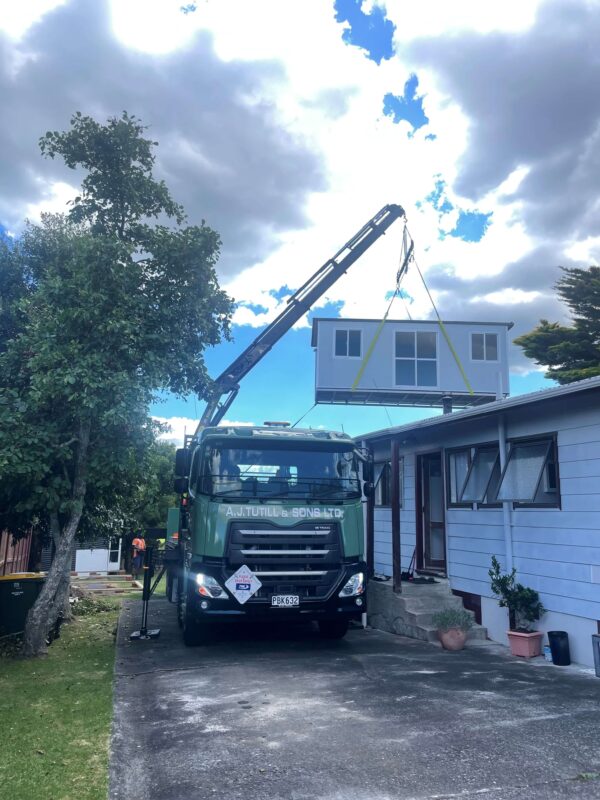
Hiring a Hiab truck can save enormous amounts of time and effort on site, especially when heavy items need to be lifted, transported, or placed with precision. At Tutill Carriers, we want every lift to run smoothly, which is why the details we receive before dispatch matter. By preparing the right information, you’ll get the correct truck, the best operator for the job, and avoid unexpected costs or delays.
Here’s a practical checklist to help you prepare before booking your Hiab hire.
1. Job Location and Site Access:
The first thing we need is an accurate job address and clear instructions on how our driver will access the site. If there are tight driveways, narrow streets, or steep approaches, please let us know. Different Hiab trucks in our fleet vary in size and manoeuvrability, so matching the right truck to the space ensures safety and efficiency.
- Are there low-hanging trees?
- Is there enough turning space for a larger truck if required?
- Will the Hiab need to park on the road, and is traffic management needed?
Providing site photos can be incredibly useful and helps us assess any restrictions before arrival.
2. Load Dimensions and Weight
Hiabs are versatile, but each truck in our fleet has a specific lifting capacity and reach. To select the right unit, we’ll need:
- Approximate weight of the item(s).
- Length, width, and height.
- Whether the load can be secured safely on the deck.
Items like spa pools, timber packs, machinery, tanks, signage, or containers can usually be handled with the right-sized Hiab, but having precise dimensions avoids costly re-bookings.
3. Lifting Requirements
Understanding exactly what you need lifted helps us prepare the correct equipment.
- Where the load will be picked up from.
- Where it needs to be placed.
- How far the boom will need to reach.
The further the reach, the lighter the load a Hiab can safely handle. With both front- and rear-mounted options in our fleet, we can match the job to the best configuration especially if we know your lifting requirements in advance.
4. Site Conditions
Ground stability and environmental conditions make a big difference in planning. A Hiab needs stable ground to extend its outriggers safely. Let us know if the ground is:
- Grass, gravel, or asphalt.
- Sloping or uneven.
- Soft due to recent rain.
If in doubt, we’ll discuss solutions such as ground protection pads or alternative truck selection.
5. Timing and Coordination
Clear scheduling avoids downtime and extra charges.
- Preferred date and time for the job.
- Whether the item will be ready on-site.
- If other contractors (e.g., installers or electricians) need to be present.
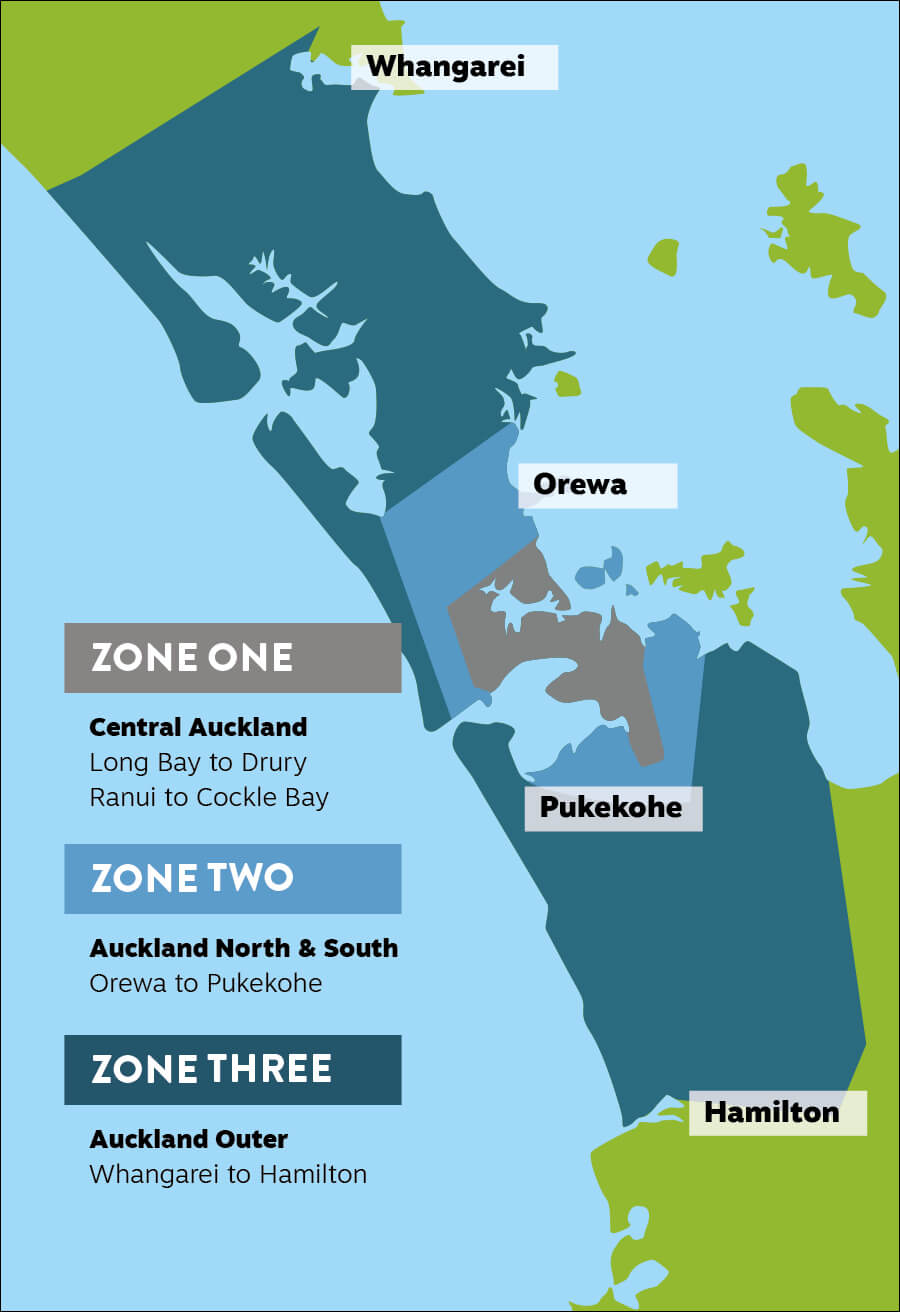
Our dispatch team is experienced at coordinating jobs across Auckland, and the more information we have, the easier it is to align everything.
6. Special Requirements
Finally, let us know if there are any extras we need to prepare for, such as:
- Oversized loads requiring permits.
- Jobs requiring multiple lifts or multiple delivery points.
- Sites with strict health and safety requirements.
Tutill’s operators are Site Safe members and hold recognised lifting qualifications, and our Hiabs are remote-control operated for improved visibility and accuracy. Sharing your site’s health and safety policies in advance helps us arrive fully compliant.
Why Preparation Pays Off
By providing clear details upfront, you’ll save both time and money. The right Hiab arrives the first time, the job is completed without delays, and you’ll avoid extra charges for re-booking or idle wait time.
Ready to book your Hiab hire? Contact Tutill today with your job details and photos, and we’ll match you with the perfect truck and operator.